 Weather today
Germany and Japan strengthen economic ties as global tensions rise

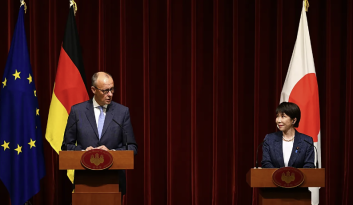
It is a meeting of the leading representatives of two of the world's largest economies. On his first visit to Japan the German chancellor Friedrich Merz has met Japanese Prime Minister Sanae Takaichi.
Takaichi and Merz issued joint statements on economic security and future technologies. These are intended to strengthen and better align cooperation between the two countries in these fields.
Although China and the United States were not explicitly mentioned in the joint statement or in subsequent remarks, the message appeared to contain indirect criticism of both countries. Beijing and Washington have repeatedly used their economic policies as a means of exerting pressure on partners and rivals.
"Both heads of state and government expressed their deep concern about the growing use of economic coercion, for example through arbitrary export restrictions and retaliatory measures affecting critical raw materials. They also rejected non-market-based measures and practices that lead to overcapacity and market distortions and thereby undermine our economic security and resilience," the joint statement said.
The two nations have said they intend to step up their cooperation in monitoring and assessing supply chains, to prevent economic dependencies from being abused as a tool of pressure. They are also examining closer collaboration in key sectors such as critical raw materials, semiconductors, batteries, electric cars, industrial AI, robotics, pharmaceuticals and wind power.
On critical raw materials, Merz and Takaichi welcomed the signing of a joint declaration of intent. At the same time, they announced plans to broaden the supply base and improve the substitutability of rare earths in the automotive industries of both countries.








 Studio One